

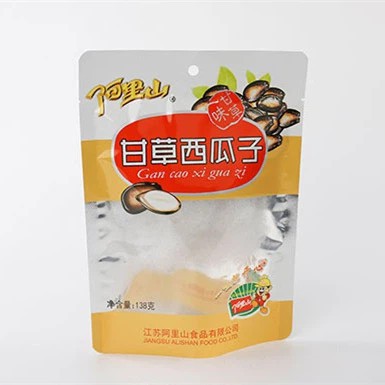
Zhejiang Yang Yang Packaging Co., Ltd was founded in 1999, which is located in Guodian Industrial Park, Haining City, Zhejiang Province. It is a high-tech enterprise specializing in the production of flexible packaging, which covers an area of more than 20,000 square meters. At present, we have established extensive strategic cooperation and long-term partnership with well-known enterprises at home and abroad such as Guangxi Black Sesame, Weiwei, Wufangzhai, Sanquan, Koushuiwa, Alishan, Shuanghui, Ganyuan, Ximai, Liangpin Puzi, Little Prince, Na'aisi, etc. Our products cover more than 20 provinces, cities and autonomous regions in China.
Our Advantages
Advanced Equipment
Our company has 6 high-speed printing machines, one of which is a 400 meter high-speed 13 color dual receiving and double releasing front and back printing machine. A total of 38 bag-making machines, high efficiency and high quality to meet customer's requirements.With advanced five-layer co combination film blowing machine, independent production of various raw materials. Our company has aluminizing machines,which can do all kinds of aluminizing products.
Customized Products
Printing, laminating, aluminum locking, aluminum washing, slitting, film blowing, bagging, molding, coating integrated production, we can do customized products, such as positioning laser products (our company has 6 laser film presses), aluminum washing products (there are 2 aluminizing machines, 4 aluminum washing machines), anti-counterfeiting products, etc.
Rich Products
We produce a wide variety of packaging products, including: octagonal sealed bags, self-supporting bags, back sealed bags, irregular bags, roll film, paper plastic bags, aluminum washing bags, organ bags, triple sealed bags, zipper bags, etc.
Quality Guaranteed
Our company has passed ISO9000 international standard quality system certification and ISO14000 environmental management system. And we have also passed QS certification, and FSSC22000 food safety management system. All products are strictly tested in accordance with industry standards and contract agreements before leaving the factory.

A retort bag is a specialized type of packaging designed for the preservation and sterilization of food products through a retort process. Crafted from high-performance materials such as laminated films or plastics, retort bags offer exceptional heat resistance and barrier properties.

The Back Seal Organ Bag is a specialized packaging solution designed for the storage and transportation of organ donations. Crafted from durable materials like medical-grade plastics or laminated films, these bags offer exceptional strength, flexibility, and barrier properties to ensure the safe preservation of organs during transit.

A Partial-Aluminized Bag is a specialized packaging solution designed to combine the benefits of aluminum foil with other materials. This bag features a unique construction where only a portion of the bag's surface is coated or laminated with aluminum, leaving other areas uncovered.

Kraft Paper Back Seal Organ Bag
The Kraft Paper Back Seal Organ Bag is a specialized packaging solution designed for the safe and sterile transportation of organ donations. Crafted from durable kraft paper, this bag offers exceptional strength and reliability while ensuring the preservation of organ integrity.

The Kraft Paper Stand Up Bag is an innovative packaging solution crafted from eco-friendly kraft paper, designed to provide durability, sustainability, and convenience for various products. Featuring a self-standing design, this bag offers stability and visibility on retail shelves, maximizing product presentation.

Kraft Food Pouches represent a sustainable and versatile packaging solution crafted from eco-friendly kraft paper, tailored for a wide range of food products. These pouches, characterized by their natural appearance and durability, offer both functionality and aesthetic appeal.

A Toast Bag is a specialized packaging solution designed to conveniently toast bread slices in a toaster or toaster oven. Constructed from durable, heat-resistant materials such as PTFE-coated fiberglass or silicone, Toast Bags provide a mess-free and easy way to prepare toasted sandwiches, snacks, or bread items.

The Long Special Shape Bag is a unique packaging solution tailored for products requiring extended or elongated storage. Characterized by its distinctive elongated shape, this bag offers versatility and practicality for a variety of items.

The Horizontal Back Seal Bag is a versatile packaging solution designed for a wide range of products. Characterized by its horizontal orientation and back seal closure, this bag offers practicality, durability, and convenience for packaging various items.
Food Laser Bag is a bag made by Laser scoring. Laser scoring capabilities allow to create pouches (or other packaging formats) with consistent, precise tearing-without sacrificing packaging integrity or barrier properties. The score lines are accurately registered and printed, and we can carefully control the position and depth of the score line. Food Laser Bags have always been favored by consumers because they are very easy to open.
Advantages Of Food Laser Bag
Easy Open Packaging
Easy-open packaging is designed to allow consumers to access a product's contents effortlessly. This technique involves precise microweakening of packaging materials (also known as scoring) using a laser. Such innovations boost consumer acceptance by simplifying the package opening process. They are prevalent across various products, from food items to pharmaceuticals..
Reseal Packaging Conveniently
Peel and reseal packaging allows consumers to open and later reseal the package conveniently, ensuring product freshness. Laser scoring plays a crucial role by creating precise weakened lines on the packaging, facilitating the initial opening. This design, often found in food packaging, combines user convenience with product protection.
Clean And Precise Cuts
Laser technology offers exceptional accuracy, ensuring that the pouches are cleanly cut without leaving any excess material or rough edges. This precise cutting is particularly crucial for applications where product integrity and hygiene are paramount.
Versatility
Laser systems can be adapted to work with various pouch materials, including plastics, foils, and laminates. This versatility allows manufacturers to choose the most suitable material for their specific product needs while still incorporating the easy-open feature.
Customizability
Laser technology allows for easy customization of the easy-open features. Manufacturers can create perforation patterns or score lines tailored to their product's unique requirements, ensuring that the pouch opens effortlessly and securely.
Safety
By eliminating the need for sharp tools to open the pouch, laser-enabled easy-open pouches reduce the risk of accidents or injuries during the opening process. This is especially important in households with children or older adults.
Extended Shelf Life
Laser-cut pouches can be designed to provide an airtight seal until the consumer is ready to use the product. This helps extend the shelf life of perishable items and preserves product freshness.
Environmentally Friendly
Easy-open pouches encourage easier access to the contents, reducing the likelihood of product waste caused by improper opening methods. Additionally, as laser technology becomes more efficient, it can lead to energy savings and a reduction in the overall environmental impact of the manufacturing process.
Manufacturing process of Food Laser Bag


Design and Prepress
The process begins with the design of the packaging artwork, including graphics, text, and any other relevant information. Designing is indeed one of the crucial processes that requires meticulous attention in order to meet clients' specifications before commencing the manufacturing process. Prepress activities involve preparing the design for printing, including color separation, and proofing.
Plate-Making
The plate-making process is a crucial step in the manufacturing of plates used to transfer ink onto the printing material during the printing process. Its main objective is to accurately reproduce the colors of the original image through dots created on the printing plate. It involves various technological advancements and precise procedures to transfer the image onto the printing plates, allowing for faithful replication of the original image during the printing process. In this step, the chosen design is transferred onto the selected material using various printing techniques like flexography, gravure, or digital printing. The printing process typically involves creating printing plates, inking the plates, and transferring the inked image onto the material through a series of rollers or cylinders.
Quality Control
Implementing quality control measures between the printing and lamination stages is crucial to ensure accurate graphic printing and identify any rejected productions before lamination. This helps to prevent additional losses and maintain high-quality standards. Firstly, we utilize an automatic monitoring system integrated into our printing machines. This system continuously monitors the printing process, detecting and flagging any deviations or errors in real-time. By doing so, it allows for immediate intervention and adjustment to maintain the accuracy and quality of the printed graphics. Furthermore, we employ a dedicated printing quality control system machine. This machine is specifically designed to assess the quality of the printed graphics, including color accuracy, sharpness, registration, and overall print integrity. It employs advanced technology and algorithms to analyze the printed output and compare it against the desired specifications. This ensures that the printed graphics meet the required standards and minimizes the chances of defective or rejected productions.
Lamination
If the Food Laser Bag requires multiple layers or enhanced functionalities, lamination will be applied. Lamination involves bonding different layers together using different lamination ways, such as dry lamination, solventless lamination, and extrusion lamination.
Aging / Curing
The Aging process refers to the reaction between the main agent and the curing agent in the lamination film. It is a crucial step in shaping the adhesive layer of the lamination film. Without proper curing, the lamination film cannot proceed to the subsequent processing stages. Curing can be classified into two types: normal temperature curing and heating curing. In normal-temperature curing, the reaction between the main agent and the curing agent takes place at ambient temperature. This process allows the lamination film to complete the reaction without the need for additional heat. On the other hand, heating curing involves subjecting the lamination film to a specific temperature to facilitate the reaction between the main agent and the curing agent. The application of heat accelerates the reaction, leading to faster curing and shorter production cycles. Both normal temperature curing and heating curing have their advantages. Normal temperature curing offers simplicity and convenience as it eliminates the need for additional heating equipment. However, it may require a longer aging time compared to heating aging. Heating curing, on the other hand, allows for faster curing and shorter production cycles. By providing the necessary heat, the reaction between the main agent and the curing agent is accelerated, resulting in quicker shaping of the adhesive layer.
Slitting and Rewinding
Slitting refers to the process of cutting the lamination film or printing film into the desired width. This step is performed during production to customize the width of the film according to specific requirements. In the slitting process, the material to be slit is released through an unwinding device. The longitudinal movement of the material is controlled by a photoelectric control system, ensuring precise positioning of the cutting tool for accurate slitting. The slitting tool cuts the material into narrower strips. After slitting, the cut strips are rolled into rolled films using a winding device. These rolled films serve different purposes depending on the requirements. Some are used as finished products for customers' automatic Food Laser Bag machines, while others are treated as semi-finished products that will be transferred to the next process for pouch making.
Pouch Making
The bag-making process involves heat sealing the composite film into a bag shape according to customer requirements. It is important that the inner layer of the composite film possesses heat-sealing properties. The bag-making process in Food Laser Bag can be divided into two methods: back-sealing bag making and side-sealing bag making. The back-sealing bag-making method is of the split type. During production, the bag-making material, a semi-finished product is released from the unwinding device and enters the forming stage. This stage is primarily accomplished through the collaboration of the photoelectric control system, forming plate, and regulating device. These components ensure precise shaping and formation of the Food Laser Bag material. A rectified deviation device was incorporated at this stage to ensure precise adjustment of the pouch size. Then punch holes if necessary, according to the design of the Food Laser Bag.
Materials For Food Laser Bag
Top Layer
Polyethylene terephthalate (PET): a film that is clear, exceptionally strong, and provides a good barrier against oils and odors. This layer is widely used to print the logos of the packaging due to its high clarity and stiffness; Oriented polypropylene (OPP): a film that also has excellent clarity/transparency for printing, has a high gloss and a good barrier to moisture. It can be substituted for PET. It is commonly used as the outer film for dry goods such as instant noodles; Nylon (NY) is a component of food packaging films best used for the packaging of fresh meat or seafood, processed meat, cheese packaging because of its excellent barrier properties against oxygen. It also has good puncture resistance, high melting point and toughness at low temperature properties; Kraft is a paper produced from natural fibers and is not generally used on its own for making Food Laser Bag. Kraft papers will usually be combined with other films to provide the necessary protection from light, oxygen, and moisture.
Middle Layer
Nylon (NY) can be used as a top layer or as a middle layer where there's a need for the packaging to have a high puncture resistance property; Vacuum metallized PET (VMPET) is a PET film that has been metallized with aluminum. It provides a good barrier to light and oxygen and is used as an alternative to pure aluminum. It has a smooth and glossier finish compared to aluminum but is slightly less efficient as a light/oxygen barrier. It is, however, cheaper and more environmentally friendly. It's best suited to use this film for products that are fast moving and does not require a long storage period; Aluminum (AL) is the best flexible film barrier against light, oxygen, and moisture to maintain the quality of your product. It is commonly used for products with long shelf life requirements and products that are very sensitive to oxygen and moisture such as powder products like milk formula, protein shakes and coffee.
Inner Layer
Polyethylene (PE) is by far the largest volume packaging film used. It is mostly used where heat sealed packaging is required. It is the inner film that comes in contact with your food products and is food grade. A reliable film in flexible packaging as it can be used in high and low temperatures, has good puncture resistance and can securely hold liquid. That is why it is widely used in Food Laser Bags for liquid contents; Cast polypropylene (CPP) is a versatile and glossy film that has a high tear and impact resistance, and heat-sealing properties, commonly used for solid food products. CPP is most commonly recommended for products needing high clarity packaging.
Certificate


Frequently Asked Questions
Q: What can Food Laser Bag can be used in?
Q: Why should we use Food Laser Bag to package fruits and vegetables?
Q: What are the advantages of Food Laser Bags?
Q: Can Food Laser Bag compromise the integrity of flexible coffee packaging?
Q: What are the requirements for Food Laser Bag packaging?
Q: What is the process of Food Laser Bag packaging?
Q: What is the slitting process in Food Laser Bag packaging?
Q: How to make Food Laser Bag packaging?
Q: Why is Food Laser Bag packaging better?
Q: What chemical is used in Food Laser Bag packaging?
Q: What is lamination in Food Laser Bag packaging?
Hot Tags: food laser bag, China food laser bag manufacturers, suppliers, factory, clear food bag, cookie packaging bag, frozen food packaging bag, compostable food bag, food packaging pouch, baby food packaging bag


